

The island’s guardians
Not just plants and animals
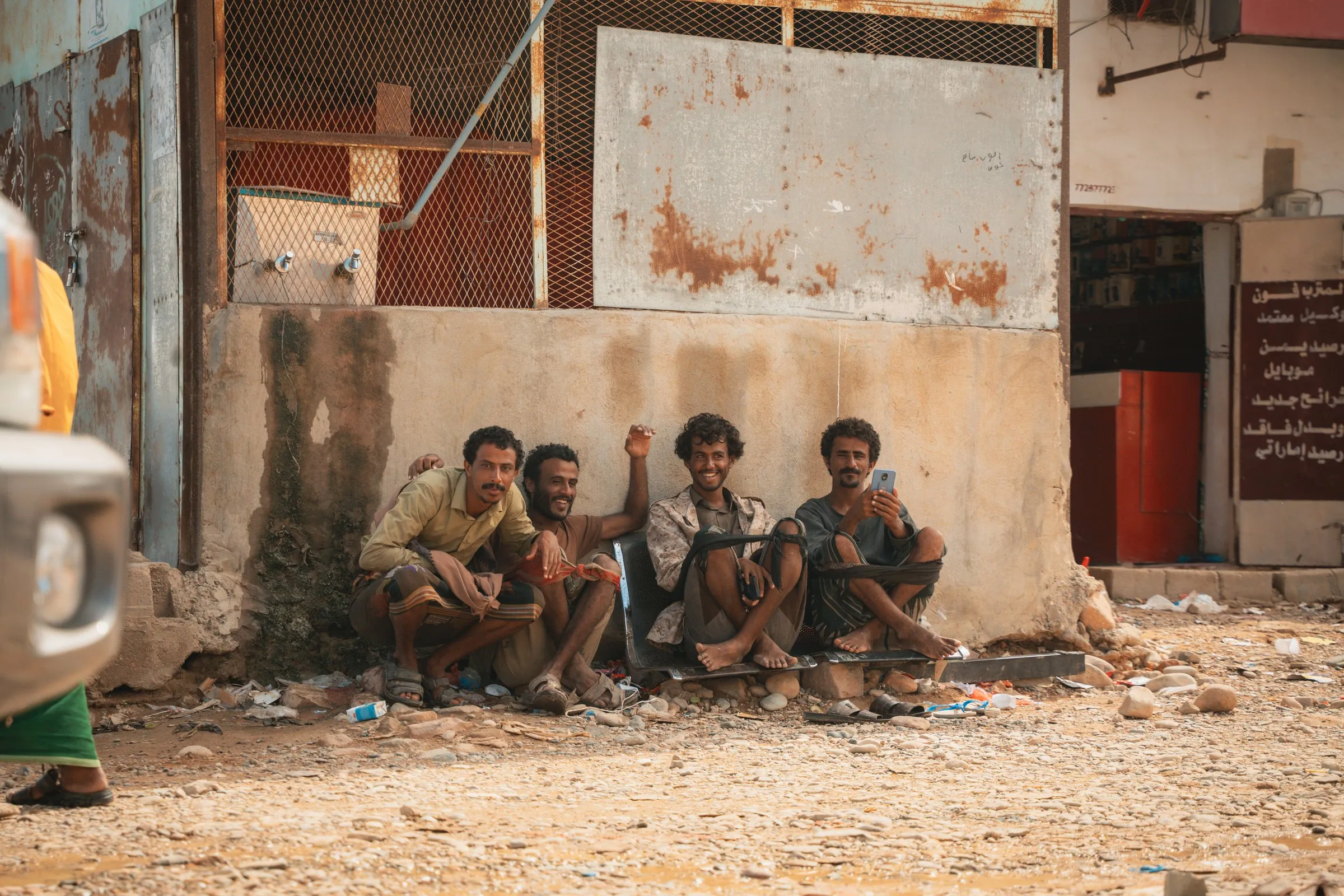
Socotra is not only home to flora and fauna found nowhere else in the world. It is also home to the Socotra people, the Soqotri: more than sixty thousand people who have lived alongside this nature and been its careful guardians.
For millennia the Soqotri have lived off the island’s resources, and to manage them they built complex traditional rules, which were decisive in preserving the biodiversity we celebrate today. That is what makes Socotra unique: in most of the world, knowledge like this is already lost, or is disappearing faster than the plants themselves.
60,000+
Roughly the number of people living in the archipelago: herders, fishermen, farmers.
Living on little
A hard place to live
The island’s environment is harsh, often hostile. Until very recently almost all islanders depended on livestock to survive, and so on the pastures that fed it. They found many ways to cope with that uncertainty.
Livestock
Livestock has traditionally been an essential resource for Socotra’s communities. Goats, sheep, cattle and camels provided milk, meat and other products for food and trade, among them clarified butter. Because each animal had different feeding needs, different pastures could be used depending on the area and the season, while mutual-aid networks and the exchange of animals helped spread the risks and support families through hard times.
Fishing and the island’s other resources
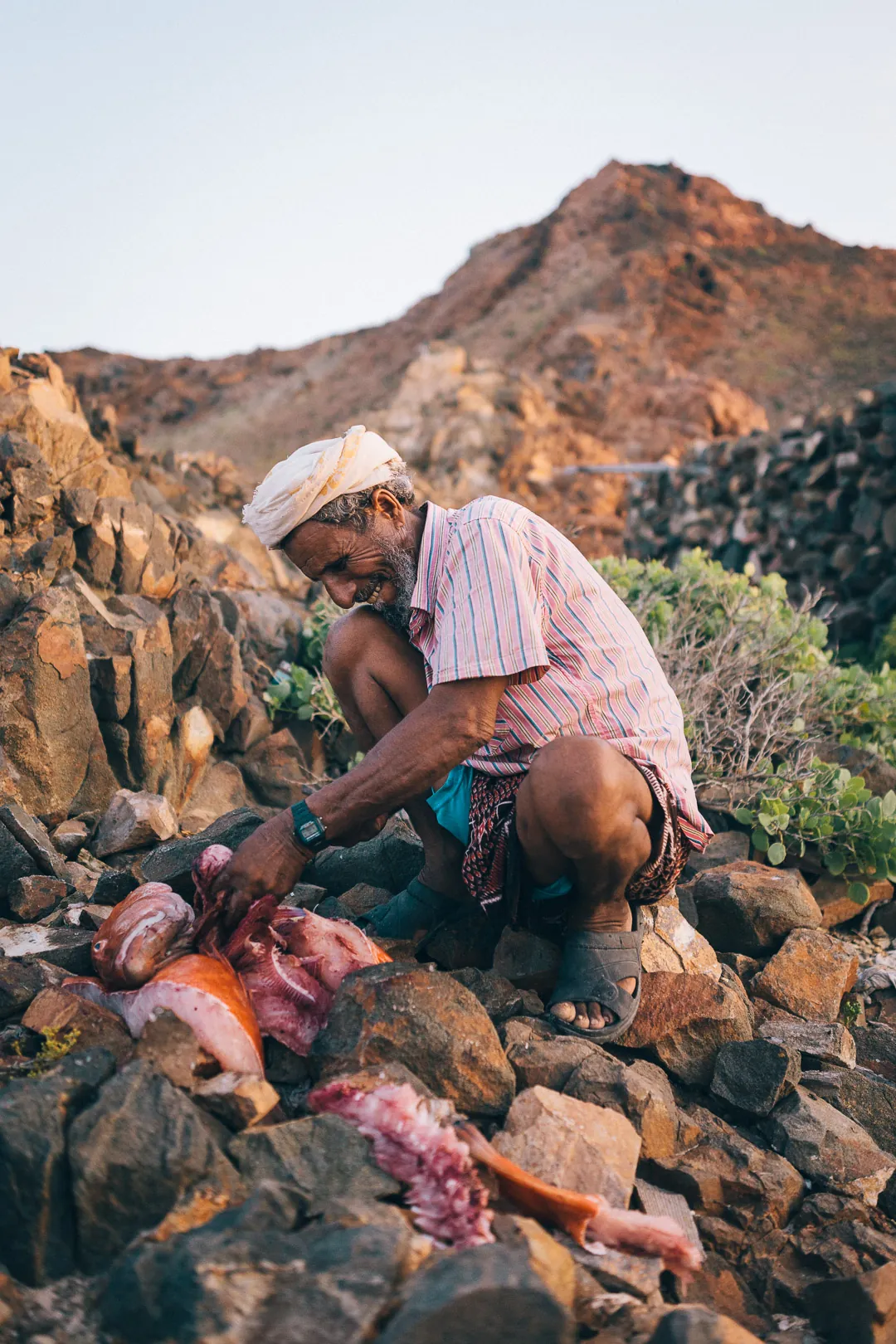
Fishing has always been central to life on Socotra, and it remains one of the main sources of food and income for many coastal communities. The sea provides fish and other marine products for local consumption and for sale, feeding an economy deeply tied to the resources of the Indian Ocean.
Alongside fishing and herding, communities found other ways to make use of what was available: small rain-fed plots, hunting and gathering wild fruit. Surpluses were exchanged for essentials such as dates and grain, through trading networks and reciprocal ties between communities.
Crafts and trade
Local ingenuity also showed in the working of the island’s raw materials. Wool, hides, clay and plant fibres were turned into textiles, leather goods, earthenware vessels and baskets. Natural products such as aloe and certain gums and resins were used in daily life and in trade. Together with ties to the coasts of Arabia and East Africa, these activities gradually linked Socotra to the trade routes of the Indian Ocean.

Plants
Caring for the vegetation to survive
Careful management of the vegetation was the key to life on the island. Plants create a microclimate for other plants, for animals and for the soil. They hold back erosion by wind and water, and they make the land more fertile and productive.
Plants provided timber and fuel; wood was made into tools and utensils, fibres into ropes, mats and baskets.
They gave food, medicines, dyes, tannins, glues, pesticides, cleaning agents and fertilisers, and even cosmetics and toys. And beyond material goods, they mattered in rituals and in the relationship with the world of spirits.
The legacy
Generations of guardians
The Soqotri people have looked after their islands for generations, and we owe the way they look today to their work and care. The traditional rules on livestock and grazing, on access to water and dry-season fodder, and on the use of plants and animals in general, were crucial to preserving the archipelago’s biodiversity.
The Socotra archipelago is recognised as one of the most important island groups on the planet for flora and fauna: the best proof of how well the Soqotri have looked after it.

The language
Soqotri, an unwritten language
The Soqotri speak a Semitic language of their own, also called Soqotri, with several local dialects. It has never had a written form, and as the archipelago develops quickly and opens up to the rest of the Arab world, it is at risk of dying out.
The same has already happened to related unwritten languages in the south of the Arabian Peninsula, mainly because of schools, radio and television, all in Arabic.

Meet them in person
The best way to get to know the Soqotri people is to travel with people from here. Before you leave, take a look at what they look after: Socotra flora and fauna, the island’s geology and the outer islands, where the archipelago’s most remote communities live.