

The archipelago
A piece of Gondwana in the Indian Ocean
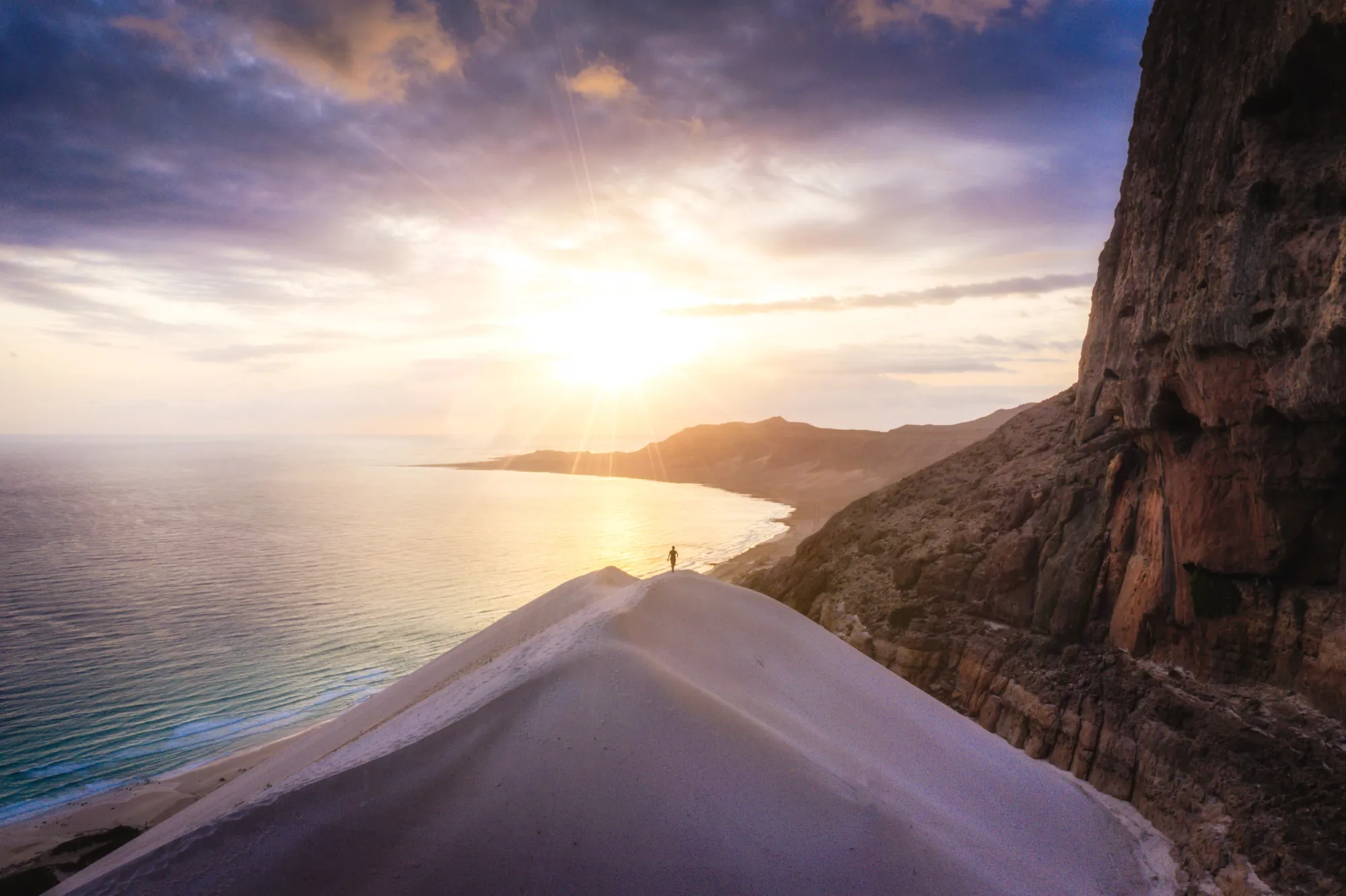
Socotra Island was not born of a volcano. It is a fragment of Gondwana, the ancient southern supercontinent, which broke away from the mainland and was left alone in the middle of the ocean. Today it lies about 230 km east of Cape Guardafui, the tip of the Horn of Africa, and 380 km south of Ras Fartak, in Yemen’s Al Mahrah region.
Socotra is the largest island in an archipelago that also includes Abd al Kuri, Samhah and Darsah. Long isolation did the rest: of its 825 plant species, 308 grow nowhere else in the world. Since 2008 the archipelago has been a UNESCO World Heritage Site, and some call it the Galápagos of the Indian Ocean. The United Nations Development Programme (UNDP) ranks it among the top five islands in the world for biodiversity.
Socotra in numbers
3,796 km²
The area of the main island, 132 km long and 49 km wide.
37%
Endemic plants: 308 of 825 species exist only here.
2008
The year the archipelago was inscribed as a UNESCO World Heritage Site.
4
The islands of the archipelago: Socotra, Abd al Kuri, Samhah and Darsah.
Three landscapes on one island
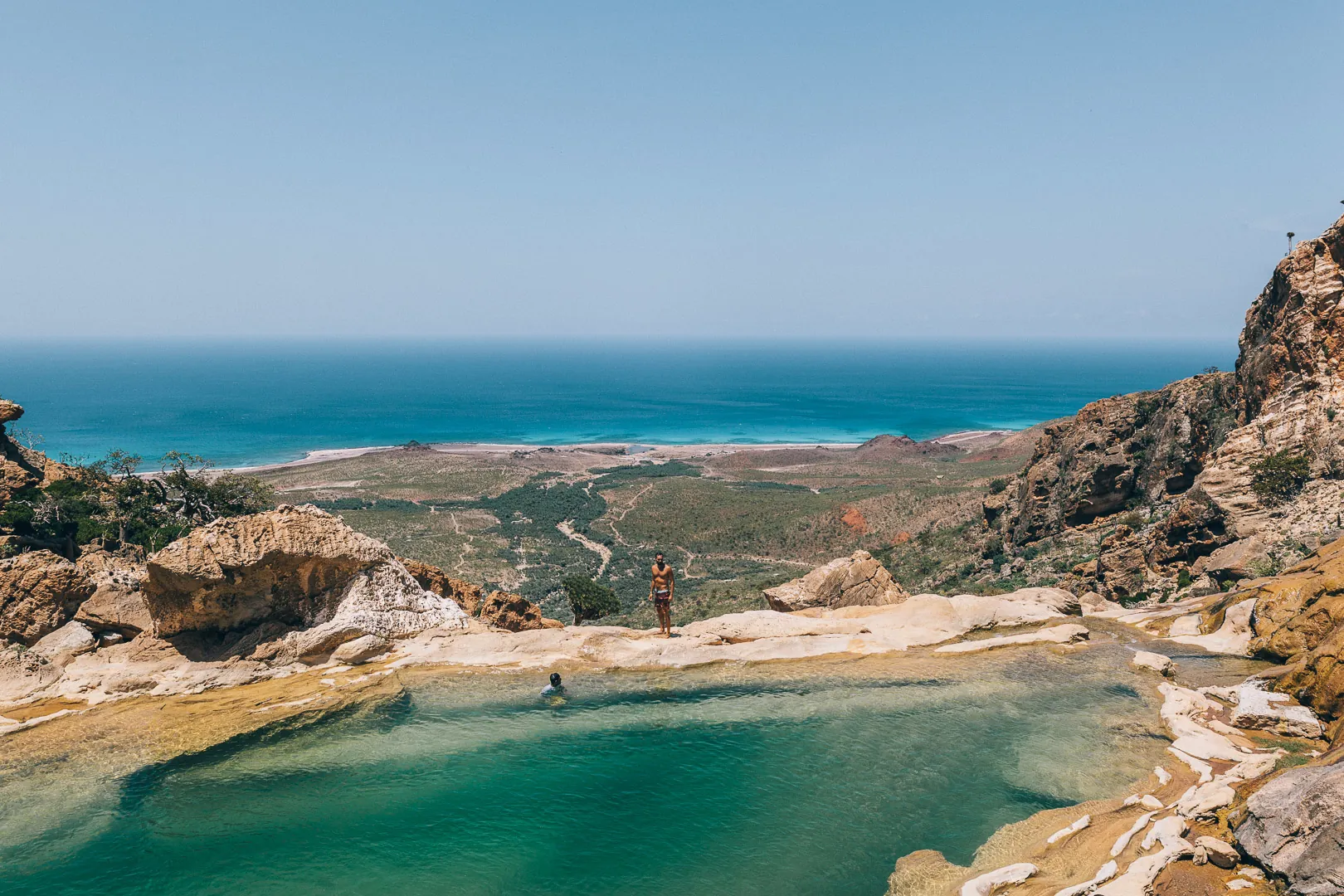
Socotra falls into three zones, and a few hours on the road will take you from one to the next.
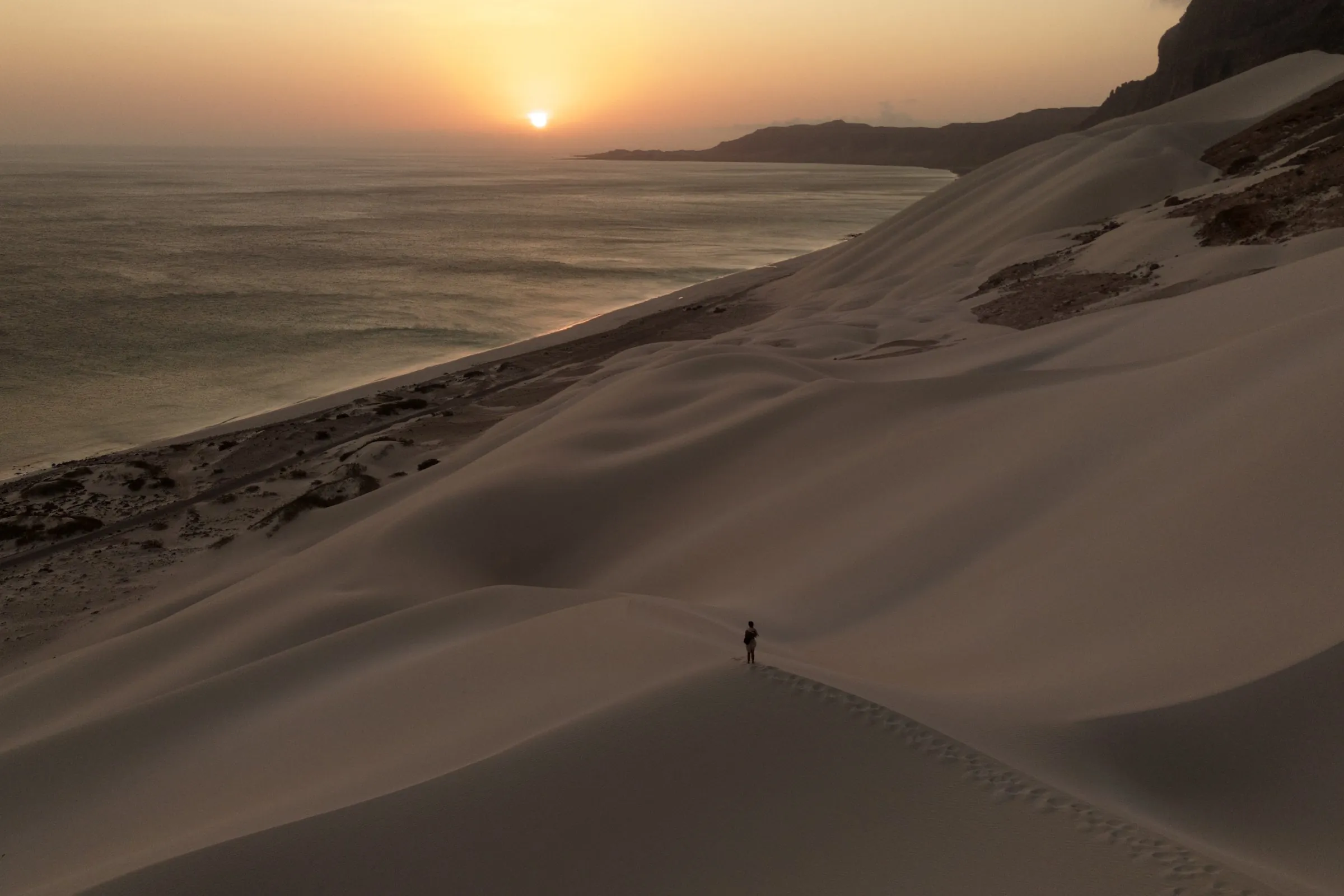
- The coastal plains, squeezed between the sea and the mountains, with dunes, lagoons and white beaches.
- The limestone plateau, karstic and riddled with caves, which covers much of the interior.
- The Hagghier Mountains, the island’s granite heart, where the streams rise.
How they formed, and why the mountains never ended up underwater, is told on the page about Socotra geology.
Climate and the monsoon
The climate is semi-desert, with an average temperature that stays above 25°C. The year is shaped by the monsoon, from June to September: fierce winds and heavy seas. For centuries the island was cut off from the world during those months, and only recently have flights reached it all year round.
The monsoon makes fishing impossible, and many people on the north coast head up into the mountains, out of the wind, for the date harvest.
History and legends
The island of frankincense and dragon’s blood
For thousands of years Socotra was a name on the merchants’ routes. For centuries, sailors from Gujarat in India have called the route that passes it Sikotro sinh, the lion of Socotra that roars without rest: the heavy sea. The island was famous for its aromatic and healing resins, for the gums of its endemic plants, for the finest aloe in the world, for ambergris and pearls, and for its role in the trade of the Arabian Sea.
As early as 2400 BC it was exporting frankincense, myrrh, aloe and dragon’s blood, the red resin gladiators are said to have smeared on before a fight so that their wounds would heal faster.
Flying serpents and giant birds
A land of frankincense, myrrh and miraculous aloe that healed Greeks and Romans at war, Socotra was also a place of sorcerers, genies and monsters. From Herodotus to Marco Polo, who was ready to swear its sorcerers were the most powerful in the world, there is no shortage of myths. Flying serpents lived there, and its mountains were believed to hide the nest of the phoenix and of the Roc, the giant bird described by Sinbad the Sailor.
Where the name comes from
There are two theories about the name. One traces it to the Sanskrit dvipa sukhadhara, “the island of bliss”. The other looks to Arabic: souk, the market, and qotra, the drop, as in the frankincense that oozes from the trees. The Greeks called it Dioscorida, the island sacred to the Dioscuri, Castor and Pollux, protectors of sailors. The name appears in the Periplus of the Erythraean Sea, a sailing manual for first-century merchants, which describes an island “very large but desert and marshy, with rivers, crocodiles, many snakes and great lizards”.
Explore further
Four ways to get to know Socotra

Flora and fauna
The dragon’s blood tree, desert roses, more than 220 bird species and a sea full of coral.


The Soqotri people
More than sixty thousand people, herders and fishermen, with an ancient, unwritten language.
The archipelago
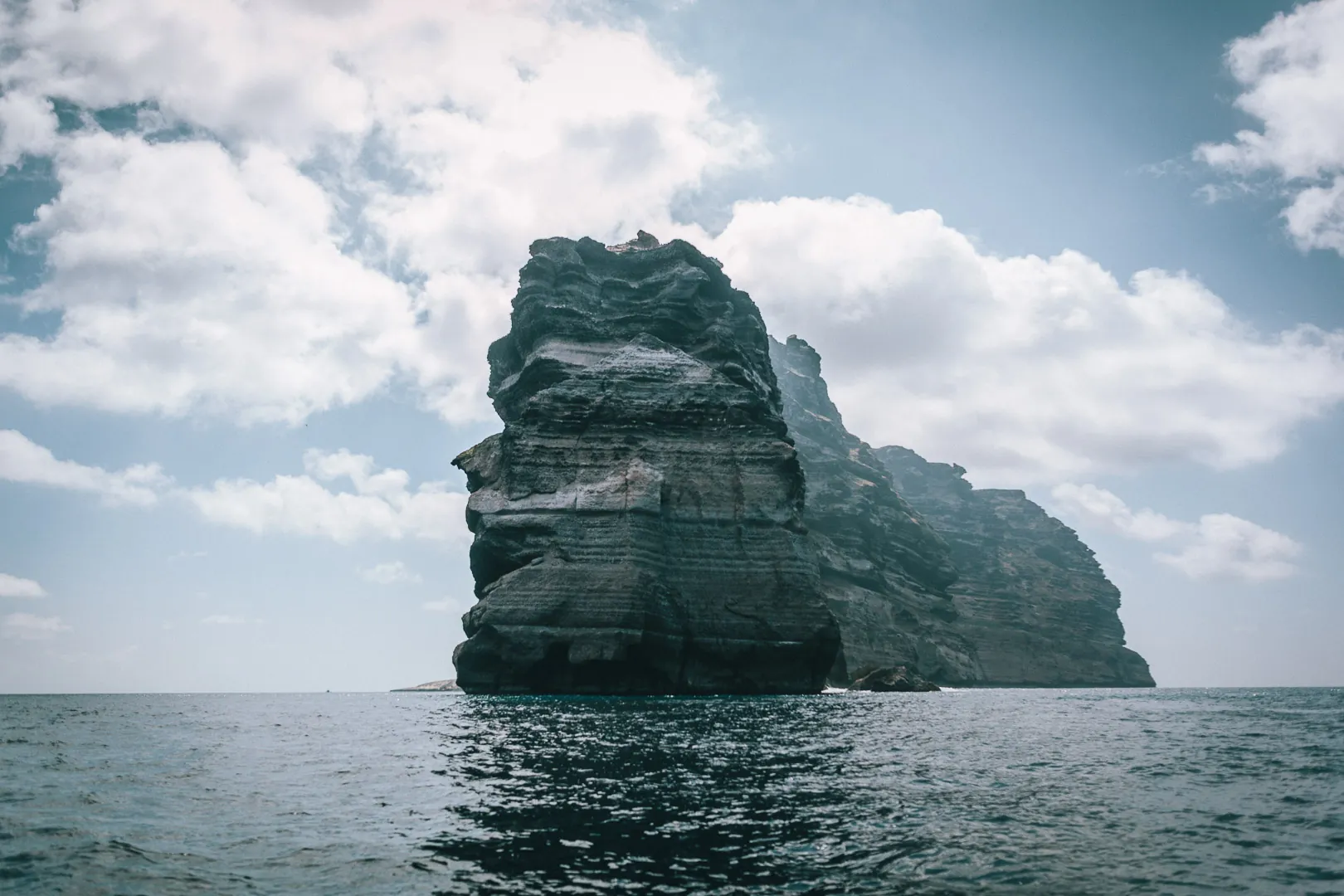
Samhah, Darsah and Abd al Kuri: sister islands, off the usual routes and sparsely populated.

See it up close
The numbers won’t explain Socotra. Walking under the dragon’s blood trees will, and so will sleeping beside the dunes and swimming in the freshwater pools. That’s what we do on our trips.