

A world apart
Millions of years alone
Isolation and the island’s environment have made Socotra flora and fauna a natural heritage unlike any other. Oddly shaped trees, drought-adapted plants, and birds and reptiles found only here tell a long story of evolution. Offshore, the sea’s biodiversity reflects Socotra’s position between Africa and Arabia.
Socotra’s species in numbers
37%
Endemic plants: 308 species that grow nowhere else.
220+
Bird species recorded, eleven of them endemic.
28 of 31
Reptile species found only in the archipelago.
730+
Species of inshore fish recorded in the archipelago’s waters.
Fauna
The animals of Socotra
Birds
More than 220 bird species have been recorded in the Socotra archipelago. Long isolation has produced an unusually rich and distinctive birdlife, which makes the islands a serious draw for birdwatchers.
Residents and migrants
Lying between the Arabian Peninsula and the Horn of Africa, Socotra also matters to many migratory species. Along the coasts and in the wetlands you can see flamingos, herons and gulls. Some birds stop over on the island during migration, while others come here to feed or breed.


The kingdom of the Egyptian vulture
The Egyptian vulture is one of the easiest birds to recognise, and a familiar sight in Socotra’s villages and open country, where it also scavenges for scraps. The archipelago has one of the highest densities of Egyptian vultures recorded anywhere in the world, which makes this one of the stars of the local birdlife.
Insects and reptiles
Socotra’s smaller creatures are as surprising as its plants. More than 1,500 insect species have been recorded. Geckos, skinks and chameleons live in the island’s dry habitats, rocky expanses and mountains, adapted to a climate that is often extreme.

Mammals
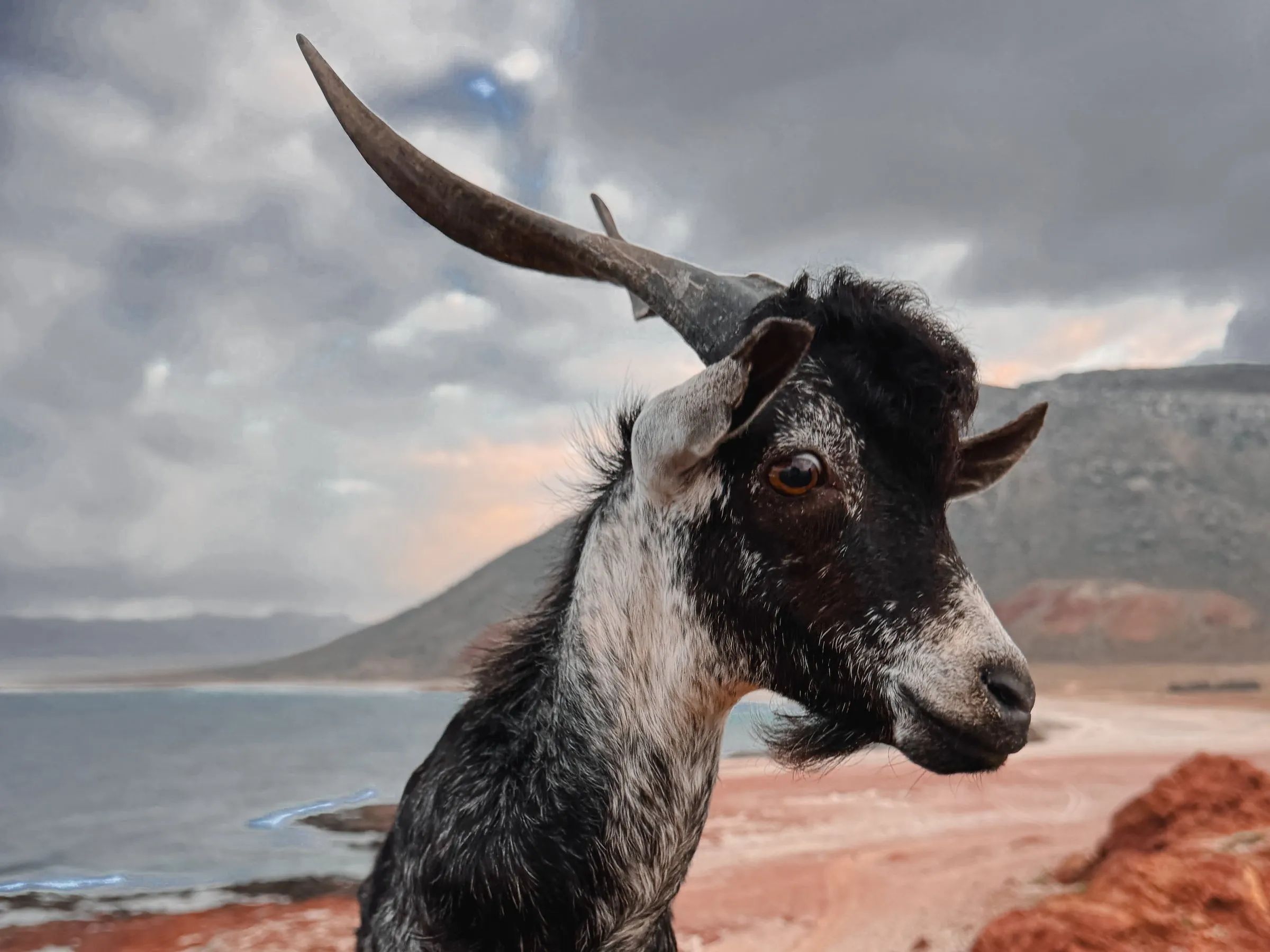
Goats, sheep, cattle and camels are part of Socotra’s everyday landscape, but they were brought in or are raised by people. The island’s native mammals are mainly bats, active from dusk and through the night. Another mammal found here is the small Indian civet, a shy, mostly nocturnal predator introduced to the island.
The sea around Socotra
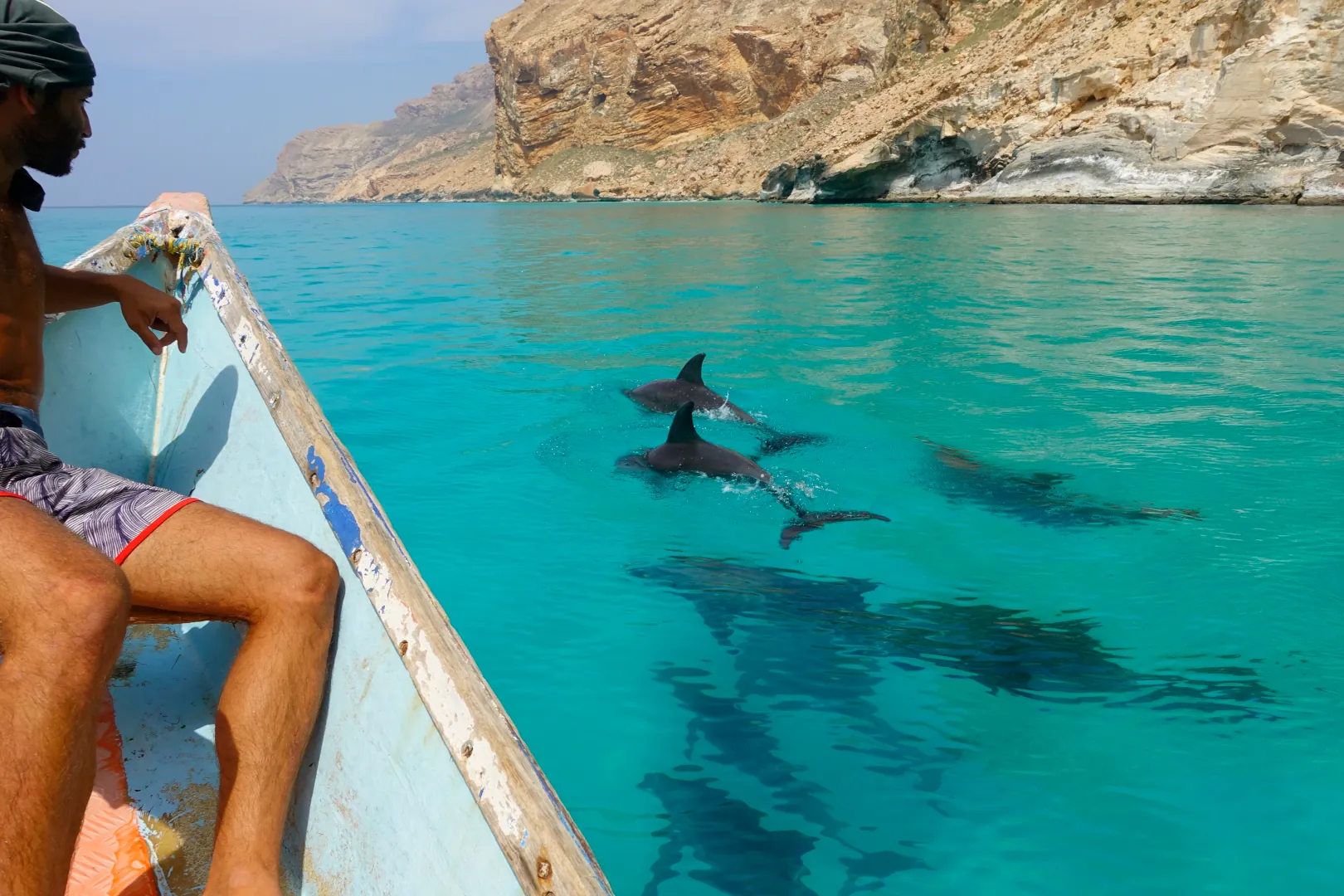
Socotra’s waters hold an extraordinary variety of marine life, thanks to where the archipelago sits, between the Arabian Sea, the Red Sea and the tropical Indian Ocean. Coral reefs, brightly coloured fish, crustaceans and molluscs fill a seabed that is still largely wild, where species from different marine environments live side by side. For such a small archipelago, the figures are impressive:
730+
species of inshore fish
230
species of hard coral, five of them endemic, and 30 of soft coral
300
species of crustacean, nine of them endemic
490
species of mollusc and 230 of seaweed
Along the coast, the beaches give sea turtles a safe place to nest. The interior has a surprise of its own: its freshwater streams are home to the crab Socotrapotamon socotrense, a species found only in this archipelago.
Between the sea and the mountains, Socotra’s flora and fauna are a natural heritage that goes well beyond its famous landscapes, and they make the island a place that matters for biodiversity.


Flora
The plants of Socotra
The first scientists reached Socotra in 1880, when the Scottish botanist Isaac Balfour collected around 500 plants, more than 200 of them new to science. Today the count stands at 825 species of vascular plants, and 308 exist nowhere else. That’s 37%, which puts Socotra among the world’s richest islands for endemic plants, alongside Hawaii, New Caledonia and the Galápagos.
This wealth of plants has earned the islands a place on the UNESCO World Heritage List as a natural site, and they are also a biosphere reserve under the Man and the Biosphere (MAB) programme. Many of the strangest plants are thought to be relics of a much larger landmass, surviving because the Hagghier Mountains have not been fully submerged for several million years. One of the oddest is the cucumber tree, Dendrosicyos socotranus: the only member of the cucumber family in the world that grows into a tree.
Three iconic trees

The dragon’s blood tree
The island’s most famous plant is Dracaena cinnabari. The name comes from the sap: cut the bark and a dark red liquid oozes out. That resin has been used as a cosmetic and a medicine since antiquity. And on Socotra’s Firmihin plateau grows the only forest of dragon’s blood trees in the world.

Frankincense, a tree with an ancient history
Frankincense has been bound up for centuries with the trade routes and traditions of southern Arabia. On Socotra, several Boswellia species, the source of this precious aromatic resin, have adapted to dry, rocky ground, taking on unusual forms that let them survive in harsh conditions. Of the roughly twenty-four known species of Boswellia, twelve are endemic to the archipelago, a measure of how exceptional its biodiversity is.
Collected for generations by carefully cutting the bark, the resin is traditionally burnt as incense, to scent the home and in rituals. Often clinging to stony slopes and rock faces, these trees are as much a part of Socotra’s landscape as of its cultural history.
The desert rose
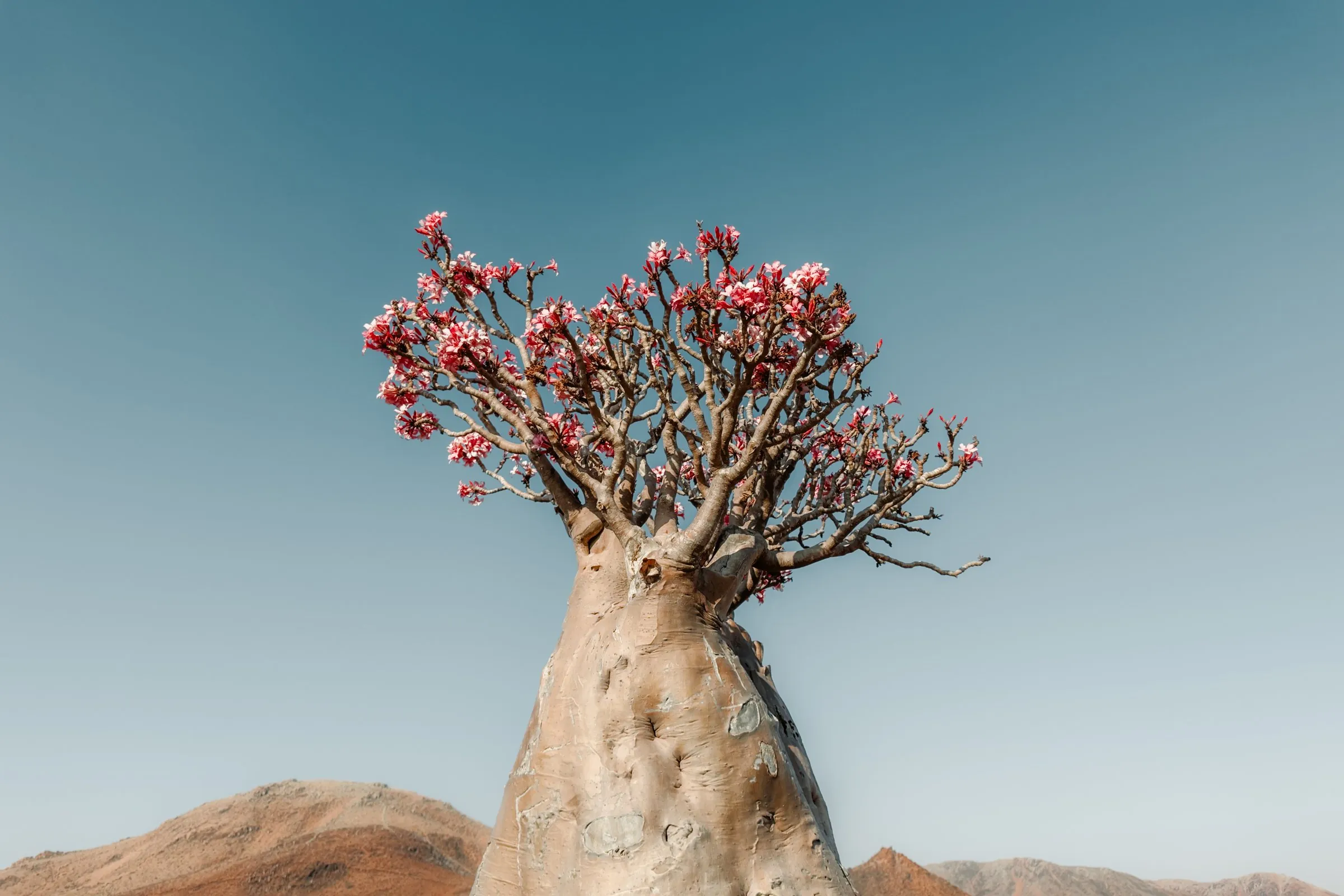
Among Socotra’s most unusual plants is the desert rose (Adenium obesum subsp. socotranum), commonly called the bottle tree for its massive, swollen trunk, which stores water and withstands long periods of drought. Its sculptural branches and pink flowers make it one of the archipelago’s most iconic plants, growing among rocky slopes and arid ground. Its distinctive shape is a remarkable example of adaptation to the island’s environment.
Where Socotra’s flora comes from
Socotra’s endemic plants appear largely to be relict populations of groups once spread over much wider areas. Where did they come from? There are two theories: that they are a remnant of the ancient flora of Gondwana, or that they migrated to the islands from the nearby continents.
The two theories don’t rule each other out: each group has its own story. With Africa and Arabia so close, and with the strength of the monsoons, exchanges to and from the islands have mattered a great deal. But the stable geology and the relatively humid oceanic climate have allowed plants to survive and evolve here far longer than on the harsher mainland.
Where the woodland grows
On the whole the islands have sparse vegetation, shaped by the dry winds that sweep across them in summer. Woodland grows only in sheltered valleys, on escarpments and high in the mountains. The exposed tops of the limestone plateau have scattered shrubs or low woody herbs, while cliff faces and gorges are richer in plants. The coastal plains are largely semi-desert, with sparse shrubs.

Keep exploring the island
To understand Socotra’s plants, look at its rocks: there’s a page on Socotra geology. Or find out how the Soqotri people have used them for centuries, and what lives around the islands of the archipelago.